
Have you ever wondered if the daily meals served on campus could actually fuel academic success rather than just fill a gap? In a bustling city like Ahmedabad, the quality of food provided to students often dictates their energy levels and overall focus throughout the day.
KhanePe has emerged as a leader in providing high-quality meals across diverse learning environments. By integrating the advanced MealPe canteen and mess solution, the brand ensures that universities, hostels, and schools receive a seamless dining experience.
This partnership marks a significant evolution in how local campuses manage their food ecosystems. KhanePe combines culinary expertise with modern technology to meet the specific needs of students and administrators. Whether you are looking for reliable institutional catering services in ahmedabad or specialized school-college catering services ahmedabad, this brand delivers consistency and nutrition.
Key Takeaways on Institutional Catering in Ahmedabad
- KhanePe is the premier provider of food solutions for campuses in Ahmedabad.
- The integration of MealPe technology streamlines canteen and mess operations.
- The service focuses on enhancing the dining experience for students and staff.
- Modern technology is used to ensure efficiency and high food quality.
- The brand supports the nutritional needs of diverse educational environments.
The Evolution of Institutional – Educational Catering in Ahmedabad
Institutional – Educational Catering has undergone a significant transformation in recent years in Ahemdabad. Many organizations are moving away from traditional, manual operations toward sophisticated, tech-driven models. These institutional catering services in ahmedabad now prioritize efficiency and precision to meet modern expectations.
The city of Ahemdabad has seen a surge in demand for high-quality food management solutions. As institutions focus on student health and operational transparency, the need for a professional institutional catering service has become clear. This shift ensures that every meal served meets rigorous safety and quality benchmarks.
The broader trend of catering in educational institutions reflects a move toward standardized, reliable processes. By adopting these methods, the education sector catering industry can provide consistent dining experiences. This evolution helps administrators focus on their core mission of teaching while experts handle the complexities of food logistics.
Modern providers now tailor their strategies to the specific needs of (schools & universities). By integrating advanced technology and nutritional planning, they offer solutions that were previously unavailable. This progress ensures that students receive balanced, healthy meals every single day.
Understanding the Unique Demands of Student Nutrition
Institutional catering is defined as providing services to youth in schools, colleges, and residential universities. This specialized field requires a deep understanding of the 5-25 age demographic. By focusing on the specific needs of these students, providers can create environments that foster both physical health and academic success.
Bridging the Gap Between Home-Cooked Meals and Campus Dining
Students living away from home miss home food the most. Therefore, it is the responsibility of the caterers to keep in mind the seclusion these students feel and serve them with high-quality, tasty meals. This approach helps create a sense of comfort within the walls of a residential school.
We are providing institutional catering services to teaching establishments including public and private elementary schools, secondary schools, and universities. By prioritizing familiar flavors and comforting textures, we bridge the gap between home environments and campus dining. This connection is vital for the emotional well-being of students who are navigating life away from their families.
Nutritional Standards for the 5-25 Age Demographic
Meeting nutritional and dietary standards in institutional catering is essential for long-term health. Institutional catering caters to youth, generally in the age group of 5-25 years, in schools, colleges, and residential universities. Each stage of development requires specific caloric and nutrient intake to support growth and cognitive function.
Effective age-appropriate meal planning ensures that students receive the fuel they need to excel. We focus on providing nutritious and balanced meals for students across all schools and educational institutions. By maintaining these high standards, we ensure that every meal contributes positively to the student’s daily performance and overall development.
KhanePe: A Commitment to Culinary Excellence in Institutional Catering
Achieving consistent culinary excellence for educational institutions requires a sophisticated approach that goes beyond standard cooking practices. By prioritizing quality and safety, KhanePe ensures that every student receives a meal that is both nutritious and appetizing. This commitment serves as the foundation for supporting student health and academic performance across various campuses.
Centralized Kitchens and Automated Processes
The backbone of this service model involves the use of centralized kitchens with automated processes. These facilities allow for the large-scale preparation of meals without sacrificing the quality or flavor profile of the food. By integrating smart cooking equipment, the team maintains precise control over temperature, cooking times, and hygiene standards.
This infrastructure eliminates the inconsistencies often found in smaller, fragmented kitchen setups. Automation ensures that every batch of food meets the same rigorous safety benchmarks. Consequently, institutions can rely on a steady supply of high-quality meals that cater to large student populations.
Menu Engineering and Nutritional Planning
Beyond the physical preparation of food, the company places a heavy emphasis on menu engineering and nutritional planning. Experts analyze the dietary needs of students aged 5 to 25 to create balanced meal plans. These plans focus on providing the right mix of macronutrients and vitamins necessary for growing bodies and active minds.
The following table highlights the key differences between traditional catering methods and the modern approach utilized by KhanePe.
| Feature | Traditional Catering | KhanePe Model |
| Cooking Method | Manual/Fragmented | Centralized/Automated |
| Quality Control | Variable | Standardized/Consistent |
| Nutritional Focus | Basic/General | Data-Driven/Engineered |
| Equipment | Standard Stoves | Smart Cooking Tech |
When considering why choose our education sector catering?, administrators often point to the reliability of this structured approach. The combination of advanced technology and careful planning ensures that students receive consistent, healthy meals every day. This focus on quality helps institutions foster a better learning environment by keeping students well-nourished and energized.
The Strategic Integration of MealPe Technology in Institutional Catering
Universities operate some of the most complex food ecosystems in the world, requiring advanced digital oversight. As student populations grow, manual tracking methods often fail to keep pace with daily demand. Educational institutions now turn to specialized software to bridge the gap between kitchen output and student consumption across various campuses.
Digitizing the Campus Food Lifecycle
MealPe helps you digitize the entire food lifecycle-from fixed mess subscriptions and daily meal tracking to final billing. This transition allows administrators to monitor real-time data rather than relying on outdated paper logs. Understanding how MealPe solves campus dining begins with the ability to track every meal served from the moment it leaves the kitchen.
Replacing Fragmented Processes with Unified Management
We replace fragmented processes with a campus-wide digital food management platform that connects every stakeholder. By centralizing these operations, institutions gain one unified platform to manage campus food with total transparency. This integration also enables digital feedback and quality control, ensuring that service standards remain high and student concerns are resolved immediately.
Core Features of the MealPe Digital Ecosystem for Institutional Catering in Ahmedabad
The MealPe digital ecosystem transforms how educational institutions manage their daily food operations. By integrating advanced software with physical infrastructure, the platform provides a seamless experience for both administrators and students. This comprehensive approach to cafeteria and hostel mess management ensures that every meal served is accounted for with precision.
Mess Manager for Attendance and Billing
The mess manager →, the core system handling student meal eligibility, attendance, and term billing, serves as the backbone of the platform. It automates the complex task of tracking student meal plans throughout the academic semester. By maintaining accurate records, the system eliminates manual errors and ensures financial transparency for the institution.
Digital Cafeteria for Paid Food Courts and Night Messes
Beyond standard meal plans, the platform supports diverse dining needs through its specialized modules. The digital cafeteria →, digitizing paid food courts, night messes, and snack counters, allows students to purchase items using their digital accounts. This flexibility ensures that students have access to food outside of traditional dining hours while keeping all transactions within a unified system.
Hardware Solutions for Secure Student Access
Reliable technology is essential for maintaining order in high-traffic dining areas. The platform utilizes hardware solutions →, high-speed rfid and qr scanners to ensure secure, verifiable student access. These tools prevent unauthorized entry and provide real-time data on dining hall occupancy.
| Module Name | Primary Function | Target User | Key Benefit |
| Mess Manager | Attendance & Billing | Hostel Residents | Financial Accuracy |
| Digital Cafeteria | Point-of-Sale | All Students | Cashless Convenience |
| Hardware Suite | Access Control | Security Staff | Verifiable Entry |
Optimizing Operations for Higher Education and Universities
Colleges and universities require specialized tools to handle the unique demands of large-scale student meal programs. Higher education (college & university dining) environments are dynamic, often requiring a balance between strict financial controls and the flexibility students expect. By implementing systems built for student life, institutions can transform their dining halls into efficient, technology-driven hubs.
Term-Based Billing and Subscription Flexibility
Modern platforms allow administrators to automatically collect base fees and reconcile consumption across messes with ease. This approach simplifies the administrative burden of term-based billing & subscriptions, ensuring that financial records remain accurate throughout the academic year. Students benefit from opt-in & opt-out flexibility, which allows them to manage their meal plans according to their personal schedules.
When institutions allow students to skip meals via app, they gain valuable insights into daily attendance. This data is instrumental in generating accurate forecasts to slash food wastage significantly. By aligning production with actual demand, kitchens can reduce costs while maintaining high quality.
Real-Time Admin Visibility and Data-Driven Forecasting
Effective management requires clear oversight of all dining activities across a sprawling campus. These recommended solutions for education empower your management and finance teams with live dashboards tracking campus-wide food operations. With real-time admin visibility, leaders can make informed decisions regarding procurement and staffing.
The following table highlights the operational shift from manual processes to digital management systems:
| Feature | Traditional Management | Digital Ecosystem |
| Billing Cycles | Manual/Paper-based | Automated Term-Based |
| Meal Attendance | Proxy-prone/Manual | Real-time Digital Tracking |
| Food Forecasting | Guesswork/High Waste | Data-Driven Precision |
| Student Access | Physical ID Cards | App-based/Biometric |
Campus Food Delivery Services for Hostels
Convenience is a primary driver of student satisfaction in residential settings. To address this, institutions can enable intra-campus ordering to hostels, ensuring that students have access to nutritious meals even during late study sessions. A dedicated campus food delivery service reduces the need for external food apps and keeps the dining experience within the secure campus ecosystem.
Ensuring Safety and Parental Oversight in K-12 School Dining
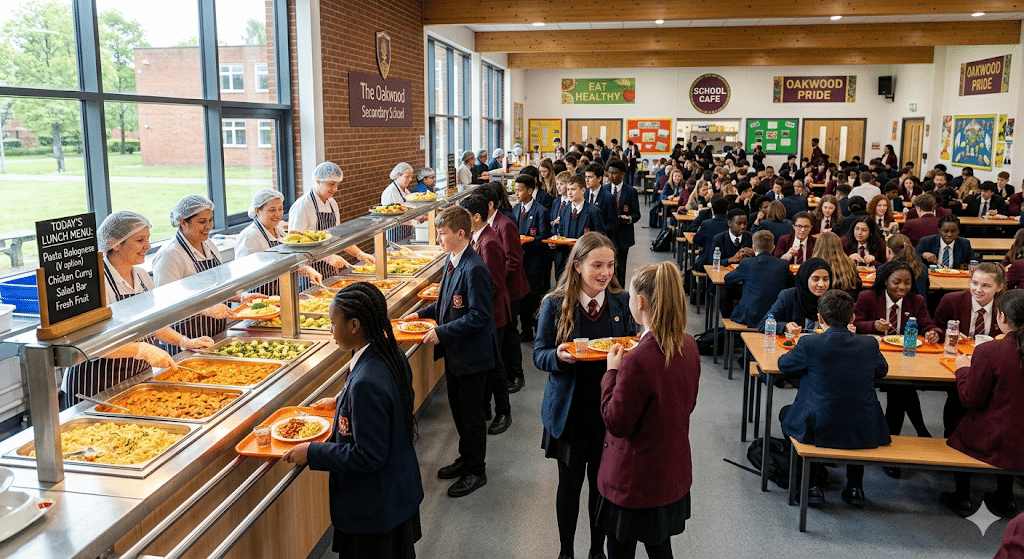
Managing a school canteen requires an entirely different approach than enterprise dining. It demands safety, discipline, and parental oversight to ensure that every student receives the right nutrition. By digitizing the school food ecosystem, institutions can remove cash from campuses while allowing parents to track what their children eat.
Strict Dietary Filtering and Allergy Management
Modern catering services for schools must prioritize the health of every child. With features designed for child safety, parents can use the app to implement strict dietary filtering. This allows them to block specific allergy-triggering ingredients or restrict junk food purchases entirely.
This level of control provides peace of mind for families in a residential school or standard K-12 setting. It ensures that the food served aligns with the specific health requirements of each student.
Daily Spending Limits and Cashless Transactions
The shift toward cashless & parent-controlled food ordering has revolutionized the lunch hour. Parents can configure exact daily or weekly maximum spends on the student’s pre-paid meal cards. This system prevents overspending and encourages better financial habits among students.
- Cash-free student roaming: Eliminates the need for physical currency on campus.
- Instant SMS updates: Parents receive immediate notifications the moment their child collects a meal.
- Disciplined recess: Pre-ordered meals are collected via a quick QR or card scan, ending the long recess rush.
Classroom-Wise Mapping for Direct-to-Desk Delivery
Logistics play a vital role in school catering services for the future. Classroom-wise mapping ensures that heavy trays are not carried by young children, reducing the risk of accidents. Vendors receive kitchen order tickets marked explicitly by class, enabling direct-to-desk delivery.
This streamlined process offers absolute parental control and complete transparency over childhood nutritional intake. By integrating these tools, schools create a safer, more efficient environment for students to enjoy their meals.
The Impact of Campus Digitization on Operational Efficiency
The impact of campus digitization is reshaping the landscape of institutional food management across India. By moving away from manual logs and paper-based systems, institutions can now manage their resources with unprecedented precision. This shift allows for a more streamlined experience for both administrators and students.
Eliminating Proxy Meals and Billing Disputes
Modern systems ensure 100% accurate attendance by verifying student identity at every point of service. This technology helps to eliminate proxy meals completely, ensuring that resources are allocated only to those present. Furthermore, the system provides automated, transparent term-end statements for every student, which leads to zero billing disputes.
Drastic Reduction in Food Wastage
Operational efficiency relies heavily on accurate planning and inventory control. Through drastic wastage reduction, kitchens prepare meals based on exact, data-driven daily forecasts. This approach ensures that the volume of food produced matches the actual number of students dining, significantly lowering overhead costs.
Improving Student Safety Through Cashless Dining
Implementing cashless dining everywhere creates a secure environment for the entire student body. With a 100% cashless campus, pre-paid student balances work seamlessly across both the hostel mess and the paid campus café. Total cash elimination removes the risks associated with handling physical currency, thereby massively improving student safety.
| Feature | Traditional System | Digital Ecosystem |
| Attendance Tracking | Manual/Paper Logs | Biometric/Digital |
| Billing Accuracy | Prone to Disputes | Automated Statements |
| Food Production | Estimated/Guesswork | Data-Driven Forecasts |
| Payment Method | Cash/Coupons | Pre-paid Balances |
Building Lasting Relationships with Educational Institutions
Creating a successful campus dining environment relies on establishing a trust-built ecosystem. This foundation requires a catering partner who can build lasting relationships, consistently provide high-quality meals and adhere to specific dietary standards. By prioritizing reliability, institutions ensure that their students receive the nourishment they need to excel academically.
Consistency Across Multiple Meal Times
Effective campus dining demands consistency across multiple meal times (breakfast, lunch, dinner), with snacks for mid-day breaks often added to accommodate different schedules. Maintaining this level of service requires rigorous planning and a deep understanding of student routines. Whether managing large universities or smaller residential facilities, we provide high-quality catering services for institutions of all sizes.
This commitment to quality extends to diverse living arrangements, including those for the modern paying guest. Many PGs and coliving spaces require the same level of professional oversight as traditional hostels. By standardizing meal quality across every service window, providers help maintain student satisfaction and operational stability.
Expert Consulting for New Hostel Mess Setups
Beyond daily meal preparation, the transition to a new facility often presents significant logistical hurdles. Our mess setup service → provides the necessary guidance to streamline kitchen workflows from day one. This expert consulting for new hostels ensures that administrators can implement modern, efficient operations without the typical growing pains of a new facility.
Professional consultants evaluate space, equipment needs, and staffing requirements to create a functional dining area. By focusing on smart design and optimized processes, these setups reduce long-term costs and improve food safety. This proactive approach allows educational institutions to focus on their primary mission while leaving the complexities of food management to experienced professionals.
Overcoming Challenges in Large-Scale Institutional Catering
Scaling food production while keeping quality high remains the ultimate test for any catering provider. A professional institutional catering service must balance high-volume output with the delicate nature of fresh, nutritious food preparation.
Maintaining Quality Day After Day
Consistency serves as the backbone of a successful dining program. This industry demands a long-term commitment to delivering quality day after day, month after month.
Providers achieve this by implementing robust management systems that track every ingredient and process. These digital tools ensure that the final meal meets strict standards, regardless of the total volume served.
Adapting to Diverse Dietary Standards and Schedules
Educational institutions often operate on complex timelines that require precise coordination. Kitchen teams must adjust their workflows to meet varying meal times while ensuring that every student receives a hot, fresh meal.
Furthermore, catering partners must accommodate a wide range of dietary needs and cultural preferences. By maintaining flexible menu engineering, providers can successfully serve diverse populations without sacrificing nutritional integrity.
Conclusion
Modern educational institutions face the challenge of balancing high-quality nutrition with complex operational demands. KhanePe provides the necessary tools to modernize these processes through advanced culinary management and digital integration. Are you ready to digitise your campus food operations?
Adopting a unified platform allows administrators to monitor meal cycles with precision. These systems bring structure, transparency, and efficiency to your university dining ecosystem. Students benefit from consistent meal quality, while management gains valuable insights into consumption patterns and inventory needs.
Technology serves as the bridge between traditional catering and the needs of today’s tech-savvy student body. It minimizes food waste and ensures that every meal meets strict safety standards. Institutions that prioritize these digital upgrades position themselves as leaders in student welfare and operational excellence.
The path toward a smarter campus starts with a commitment to innovation. Reach out to the team to request a demo and see how these solutions align with your specific institutional goals. Taking this step ensures a reliable, data-driven future for your dining facilities.
FAQ
What defines KhanePe’s institutional catering services in Ahmedabad?
KhanePe stands as a premier provider of institutional catering services in Ahmedabad and Ahemdabad, specializing in delivering high-quality meals to schools, universities, and residential campuses. By integrating the MealPe platform, the brand provides a unified solution for cafeteria and hostel mess management, ensuring a seamless and tech-driven dining experience for students and staff alike.
How does MealPe help digitize the complex food ecosystems of universities and colleges?
MealPe digitizes the entire food lifecycle by replacing fragmented processes with a campus-wide digital food management platform. From fixed mess subscriptions and term-based billing to real-time consumption tracking across night messes and snack counters, the system brings structure, transparency, and efficiency to educational institutions of all sizes.
What specific safety features are available for K-12 school catering services?
For school-college catering services in Ahmedabad, the platform offers absolute parental control and oversight. Parents can utilize strict dietary filtering to block allergy-triggering ingredients, set daily spending limits on pre-paid meal cards, and receive instant SMS updates when a child collects their lunch. Furthermore, classroom-wise mapping enables direct-to-desk delivery, ensuring young children do not have to carry heavy trays during the recess rush.
How does the platform address the nutritional needs of students in the 5-25 age group?
Institutional catering is defined as providing services to youth in schools, colleges, and residential universities, which requires age-appropriate meal planning. KhanePe focuses on meeting nutritional and dietary standards in institutional catering by serving balanced meals for students. By bridging the gap between home-cooked food and campus dining, the service helps alleviate the seclusion students often feel when living away from home.
How does the MealPe ecosystem contribute to a drastic reduction in food wastage?
The system generates accurate daily forecasts to slash food wastage through opt-in and opt-out flexibility via a mobile app. Students can skip meals in advance, allowing centralized kitchens with automated processes and smart cooking equipment to prepare meals based on exact, data-driven daily forecasts rather than vague estimates.
What hardware solutions are used to manage student access and attendance?
To ensure 100% accurate attendance and eliminate proxy meals completely, MealPe utilizes hardware solutions such as high-speed RFID and QR scanners. These tools provide secure, verifiable student access at both the hostel mess and paid campus cafés, creating a completely cashless dining environment that massively improves student safety.
Does KhanePe offer expert consulting for new hostel mess setups or coliving spaces?
Yes, KhanePe provides expert consulting and mess setup services for new hostels, residential schools, and coliving environments like PGs (paying guest accommodations). They assist institutions in establishing efficient operations that maintain consistency across multiple meal times—including breakfast, lunch, dinner, and mid-day snacks—while adhering to specific dietary standards.
How does campus digitization eliminate billing disputes for management and finance teams?
The MealPe Mess Manager serves as the core system for handling student meal eligibility and term billing. By automating the reconciliation of consumption across all campus messes, the platform provides transparent term-end statements for every student. This results in zero billing disputes and empowers administrators with real-time visibility through live dashboards tracking campus-wide food operations.
Why should an educational institution choose our education sector catering model?
Choosing this model ensures culinary excellence for educational institutions through menu engineering and nutritional planning. The service demands a long-term commitment to delivering quality day after day, month after month. By partnering with a caterer that builds lasting relationships and utilizes digital feedback and quality control, institutions can provide high-quality tasty meals that support the overall well-being and academic performance of their students.
5 Comments
1pluscasino, Ooh, a whole casino online. Sana masuwertihan tayo dito! Wish me luck, mga ka-tropa! Check it out here: 1pluscasino
42vipph, Another VIP option, hmm? Parang kahawig nung isa ah. Double check ko nga muna kung anong mas okay. Explore here for yourself: 42vipph
Wjevologin? Medyo bago sa pandinig ko ah. Any good? Anyone here who can vouch for this? Baka naman pwede tayong manalo dito? Visit: wjevologin
Nếu bạn muốn chơi game thỏa thích với thương hiệu này, bạn hãy tải và cài đặt ứng dụng từ link chính thức của chúng tôi. Điều này giúp đảm bảo an toàn và tránh các rủi ro từ những nguồn không rõ ràng. 66b – Trang Chủ Chính Thức Nhà Cái Cá Cược Đẳng Cấp Hàng Đầu Châu Á 2026 Sau khi tải ứng dụng, bạn có thể đăng ký tài khoản và bắt đầu trải nghiệm ngay. TONY05-09
[…] The city’s heart is a key spot for business. We help offices in CG Road Ahmedabad and Ashram Road Ahmedabad. Our fast delivery meets the needs of these busy areas. […]